
A Complete Guide to Coil Winding Machine Controller Setup: From Basics to Advanced
2026-06-09
Guangri Electronic Machinery | June 2026
In any coil winding system, the controller is the brain that determines everything—turn accuracy, wire alignment, and production efficiency. Get the settings right, and you get consistent coil quality with minimal material waste. Get them wrong, and you are looking at rework, scrap, or worse, field failures.
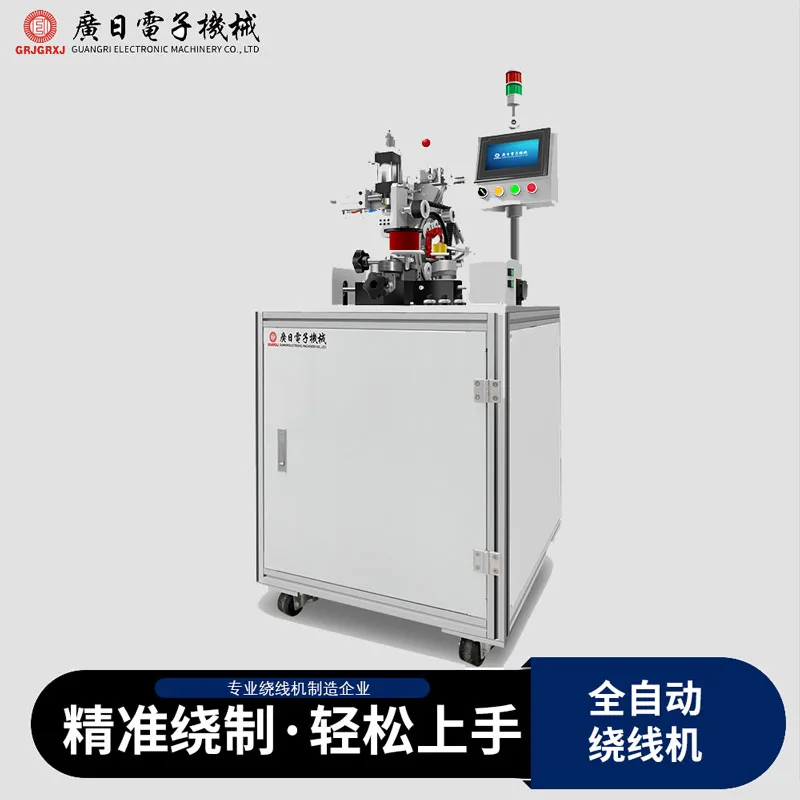
This guide walks through the full controller configuration process using the JGJ6204 high-speed winding machine as a practical example. Whether you are an operator on the floor or a buyer evaluating equipment, this will show you what separates a basic winder from a precision machine.
1.Core Parameters: The Four Things That Define Coil Quality
Turn Count & Layer Count
These are your baseline settings. The controller needs to know:
Target turns: Total turns per coil
Layer count: How many layers the wire will stack
Wire diameter & insulation thickness: These directly affect packing density
Practical tip: The JGJ6204 handles wire diameters from 0.03mm to 1.2mm. Always double-check your wire spec sheet before entering values. A 0.05mm error in diameter input can cause layer overlap or gaps that ruin the entire coil.
Bobbin / Coil Form Dimensions
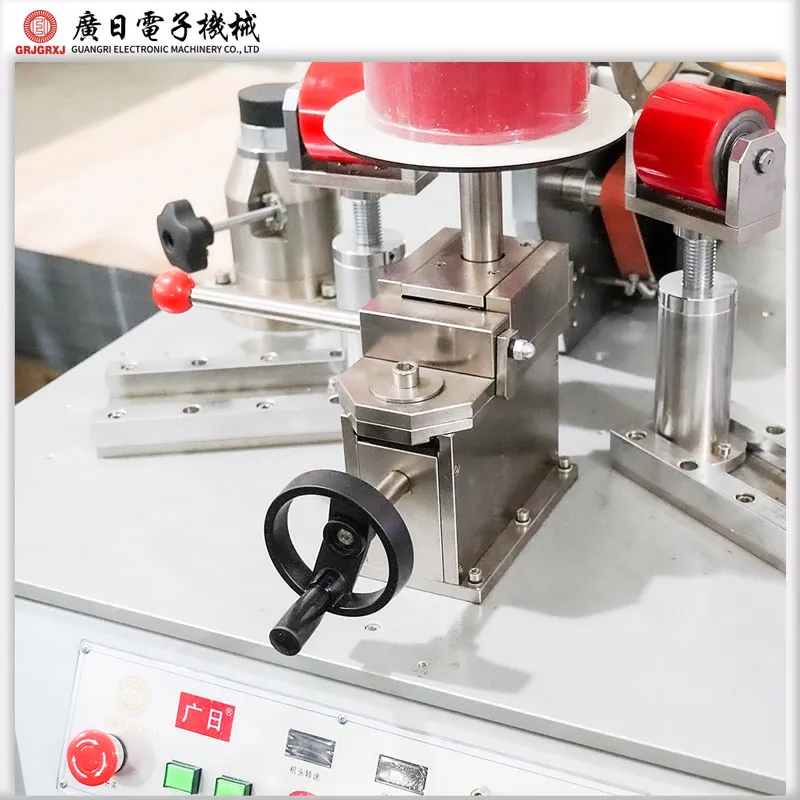
Enter the width and height of your bobbin or core form, and the controller calculates the traverse travel automatically. This prevents wire spillover and keeps every layer within the edges.
Winding Direction
Clockwise (CW) or counterclockwise (CCW) is not just about physical coil structure—it affects electrical polarity in sensitive designs. The JGJ6204 lets you switch directions from the panel without mechanical adjustments.
Traverse / Wire Guide Motion
The traverse step resolution determines how compact your coil is. The JGJ6204 uses a servo-driven traverse with 0.01mm resolution, which is what you need for precision coils where consistency matters batch after batch.
2.Speed Control: Balancing Throughput and Quality
| Speed Mode | When to Use It | JGJ6204 Setting Recommendation |
| High speed | High-volume standard coils | Up to 3,000 rpm, best for wire ≥0.5mm |
| Low speed | Delicate start and finish turns | 500–800 rpm to prevent loose winding at endpoints |
| Ramp-up / Ramp-down | Avoiding tension spikes | Set a 2–3 second acceleration curve to reduce wire breakage |
Key insight: Faster is not always better. With fine wire (<<0.1mm), high speed creates tension fluctuations that snap the wire. Pair it with closed-loop tension control if you are running thin gauges.
3.Advanced Functions: What Modern Controllers Can Do
Auto-Start vs. Manual / Pedal Mode
Auto-start: Hands-free continuous production for batch runs
Pedal mode: Operator-controlled winding for prototypes or complex coils
The JGJ6204 switches between both modes without reprogramming—same recipe, different control method.
Pause at Ends & Slow Traverse
The machine slows or pauses at bobbin edges to prevent wire buildup. This is critical for rectangular coils where edge flatness directly affects downstream assembly.
Home Position / Reset
Every startup returns to the mechanical home position, eliminating cumulative error. For repeat orders, this cuts changeover time by roughly 50%.
4.Recipe Storage: Save Your Settings, Save Time
The JGJ6204 stores 100 programs, each saving:
Turn count, layer count, wire diameter
Traverse travel, speed curves
Tension parameters
Naming convention we recommend: Customer code + coil model + wire gauge, e.g., GR-2026A-0.5mm. Operators can load the right program instantly—no guesswork, no setup errors.
5.Testing & Validation: Three Steps Before Full Production
Even with correct parameters, always run validation:
Dry run: Run without wire to verify traverse path matches bobbin dimensions
Visual inspection after 3–5 layers: Check for even spacing, overlaps, or gaps
Turn count verification: Compare actual turns against controller reading; error should be <<0.5%
6.Quick Troubleshooting
| Symptom | Likely Cause | Fix |
| Actual turns ≠ controller reading | Sensor drift or wrong counter resolution | Recalibrate encoder, check integer vs. decimal counting mode |
| Coil wound in reverse direction | CW/CCW setting mismatch | Verify direction setting and motor phase sequence |
| Uneven layer stacking | Speed-tension mismatch | Reduce ramp slope, check tension wheel wear |
| “Travel limit exceeded” alarm | Wrong bobbin dimensions or traverse start offset | Reset dimensions, reprogram traverse start point |
Conclusion
Controller setup is the first line of defense for coil quality. The JGJ6204 high-speed winding machine combines servo traverse, recipe storage, and multi-stage speed control to minimize setup time while maintaining precision coil consistency.
For the complete JGJ6204 parameter manual or a custom winding solution, contact the Guangri Electronics Machinery technical team.