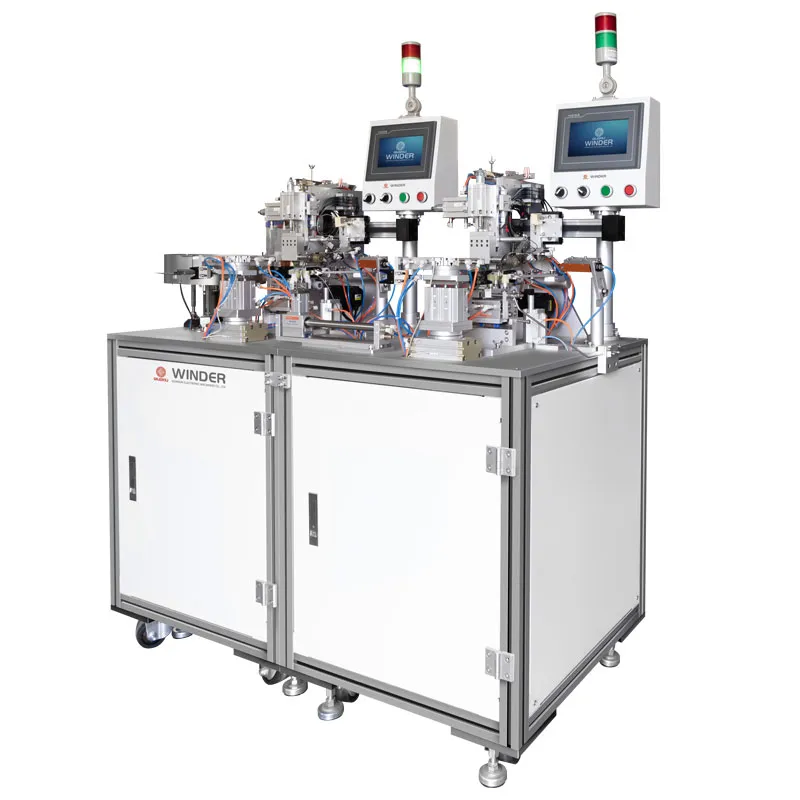

From Requirement to Delivery: How a Custom Rectangular Coil Winding Machine Is Born
2026-06-17
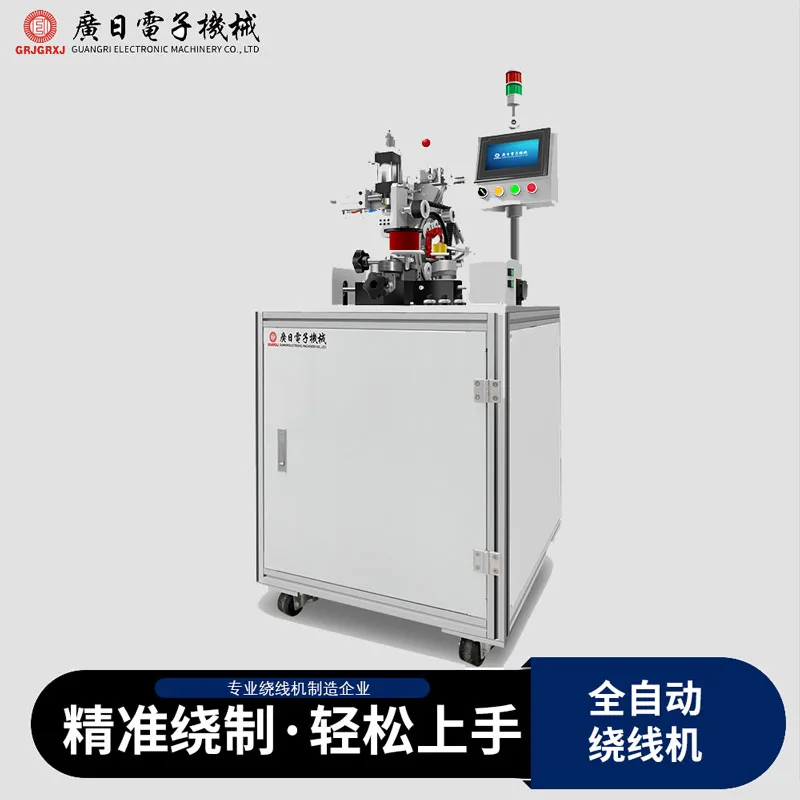
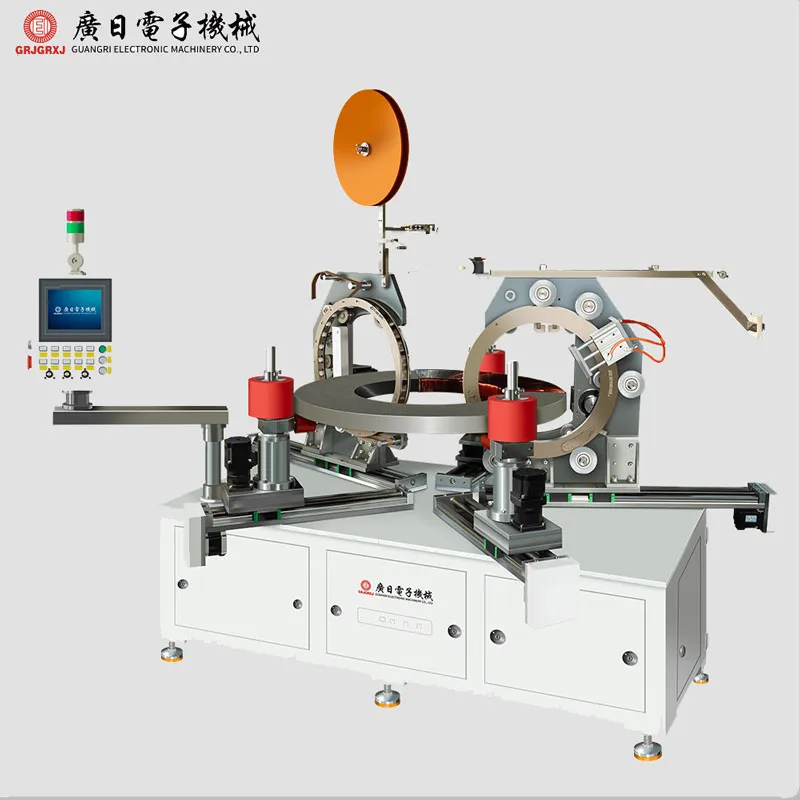
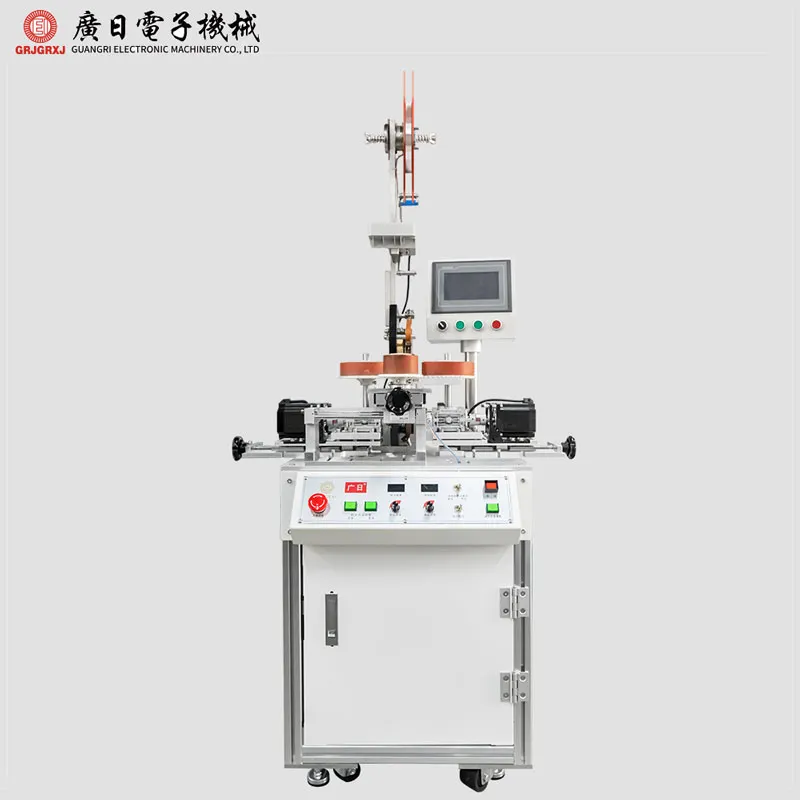
Standard machines handle 80% of customer needs. But the remaining 20% often defines a company’s competitive edge. This article walks through the full journey of a custom rectangular coil winding machine recently delivered by Guangri Electronics Machinery—from initial requirement discussion to final handover. It reveals what non-standard automation equipment development actually looks like.
1.Customer Requirements: Why Standard Machines Fall Short
The client, based in East China, specializes in high-power inductors and transformers. Their new product uses a rectangular cross-section bobbin, imposing three non-negotiable demands:
| Requirement | Standard Machine Limitation | Custom Need |
| Rectangular bobbin with 3:1 aspect ratio | Standard machines fit round or square bobbins; rectangular winding risks edge spillover | Redesign traverse travel trajectory |
| Automatic inter-layer insulation paper insertion | Standard machines lack insulation paper feeding mechanism | Add automatic paper insertion module |
| Turn accuracy ±0.5% | Standard machine accuracy ±1%, insufficient | Upgrade encoder resolution and calibrate tension closed-loop |
The client had previously tried multiple standard machines from other suppliers. All were returned due to the above issues. They ultimately chose Guangri Electronics Machinery for a customized development.
2.Solution Design: Four Weeks to Finalize, Communication Is Key
Custom equipment is not “building from scratch.” It is translating the customer’s process language into mechanical parameters. Guangri’s technical team spent two weeks clarifying requirements and two weeks delivering the solution:
Phase 1: Process Decomposition (Week 1-2)
- Client sent 10 bobbin samples; team measured dimensional tolerances and material hardness
- Analyzed existing manual winding videos, documenting operator habits (starting point selection, wire tensioning style)
- Defined acceptance criteria: continuous production of 100 coils, pass rate ≥98%
Phase 2: Mechanical Design (Week 3)
- Traverse upgraded to dual-axis servo system: X-axis controls width direction, Y-axis controls height direction, enabling rectangular trajectory
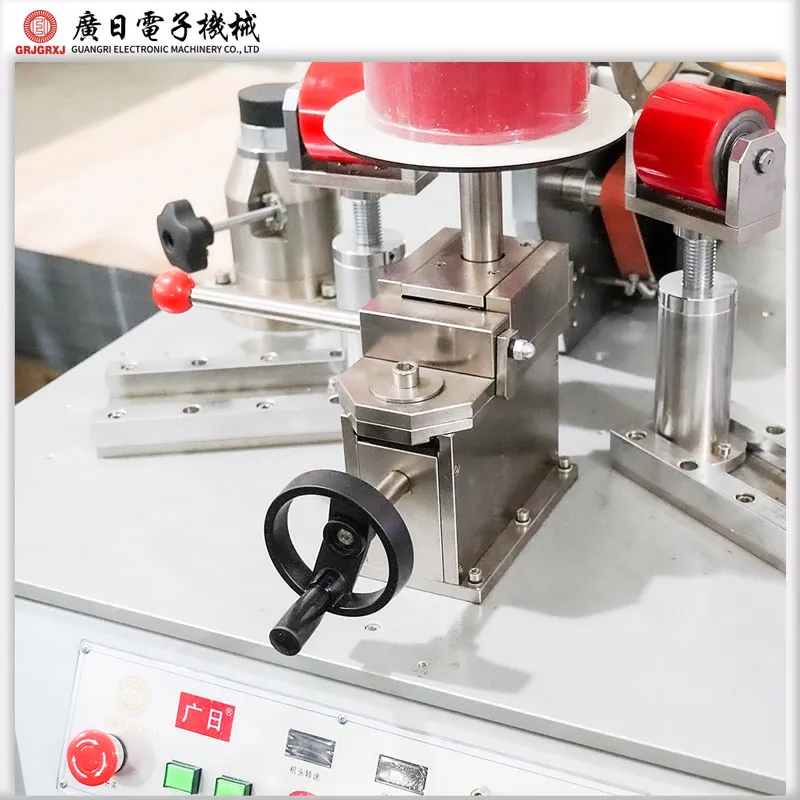
- Insulation paper feeding module uses friction wheel + cutter mechanism, synchronized with spindle speed
- Tension system upgraded to magnetic powder brake + tension sensor closed-loop, response time <50ms
Phase 3: Control Programming (Week 4)
- Wrote dedicated rectangular winding algorithm, with automatic speed reduction at corners to prevent wire buildup
- Configured 100 recipe storage slots, allowing client to switch between different specifications
3.Prototype Trial: Three Weeks of Debugging, Details Matter
After prototype assembly, the project entered three rounds of iteration:
| Round | Issue Found | Solution |
| Round 1 | Wire stacking at rectangular corners, uneven layer height | Optimized corner deceleration curve, added “pre-deceleration” distance |
| Round 2 | Insulation paper insertion offset by 2mm | Adjusted cutter-to-bobbin synchronization timing, added visual positioning |
| Round 3 | Tension drift after 4 hours of continuous operation | Recalibrated magnetic powder brake temperature compensation curve |
The final prototype passed client on-site acceptance with a 99.2% pass rate, reducing single-piece production time from 45 minutes (manual) to 8 minutes.
4.Delivery and After-Sales: Equipment Arrival Is Just the Beginning
After shipment to the client’s factory, Guangri Electronics Machinery provided:
- On-site commissioning: Engineers stationed for 3 days, training operators and maintenance staff
- Program backup: Clients can independently modify turns, layers, and other parameters; complex adjustments supported remotely
- Spare parts kit: One-year supply of wear parts (ceramic wire guide eyes, cutter blades)
Client feedback: “We used to think custom equipment meant high risk and long cycles. But this time, from order to production in under three months-faster than buying an imported standard machine.”
5.Boundaries and Principles of Custom Services
Guangri Electronics Machinery does not accept every request. The following situations are steered toward standard machines or process adjustments:
| Situation | Reason | Recommended Alternative |
| Single-unit order, budget <50,000 RMB | Custom development cost cannot be amortized | Recommend standard machine + fixture modification |
| Vague requirements, no samples provided | High design risk, high probability of rework | Require client to provide bobbin, wire, and target samples |
| Request for disruptive innovation (e.g., entirely new winding principle) | R&D cycle uncontrollable | Suggest joint university/research institute project |
Conclusion
The essence of a custom winding machine is replacing manual experience with mechanical precision. Guangri Electronics Machinery has accumulated over 50 custom cases in rectangular coils, flat coils, and multi-strand parallel winding, developing a complete methodology from requirement analysis to after-sales support.
If your coil process exceeds standard machine capabilities, welcome to discuss feasibility with Guangri’s technical team.